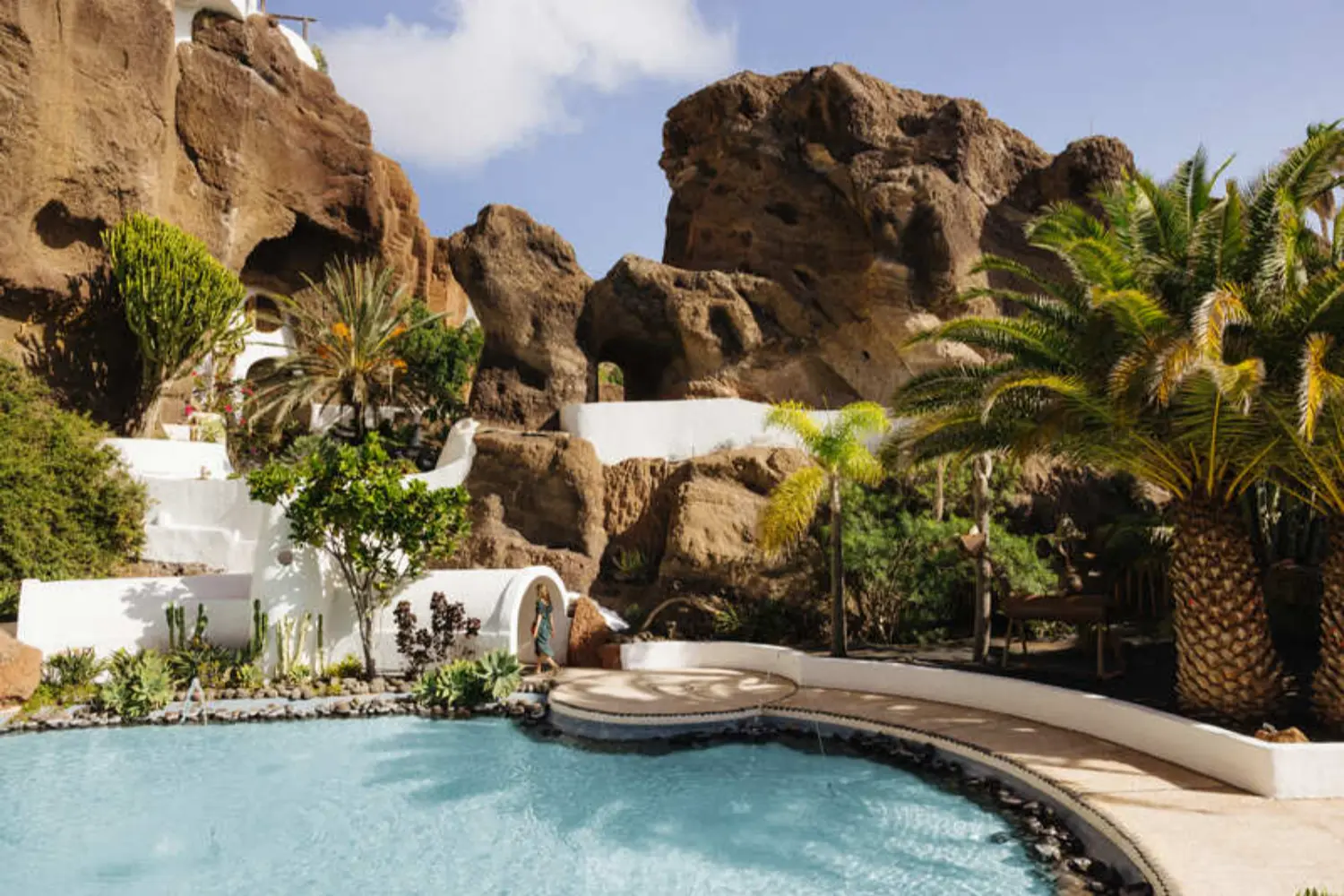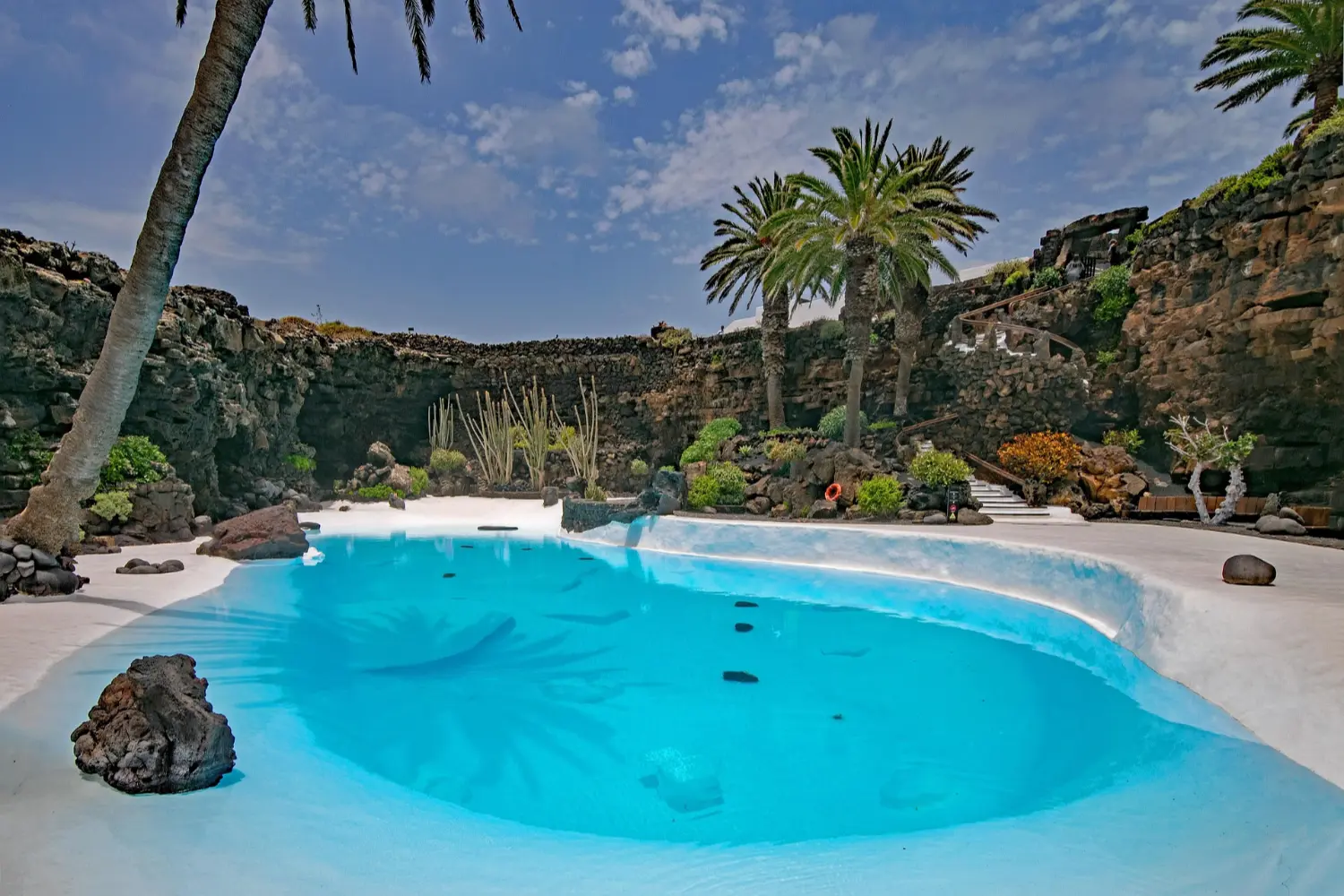
Jameos del Agua is one of Lanzarote’s most memorable places because it brings together volcanic geology, art, architecture and a sense of calm in one carefully shaped visit. Set inside a section of the lava tube created by the Volcán de la Corona, it is a place where dark basalt, water, white surfaces and planted gardens work together beautifully. It is an easy addition to a north-Lanzarote itinerary and a lovely choice for couples, families and anyone interested in César Manrique’s vision for the island.
What are the Jameos del Agua?
A jameo is an opening created when part of the roof of a volcanic tunnel collapses. At Jameos del Agua, this natural structure became the starting point for one of César Manrique’s best-known interventions. Rather than hiding the volcanic rock, the project frames it with paths, terraces, vegetation, water and simple white architecture. The result feels both dramatic and welcoming: visitors descend into a lava landscape and then move through spaces designed for observation, rest and culture.
The lava tube belongs to the same volcanic system as Cueva de los Verdes and continues towards the coast beneath the Atlantic. This geological context explains why the visit is much more than a garden or a museum. It is an opportunity to see the interior of a volcanic formation while also discovering how Lanzarote developed its distinctive approach to tourism: protecting the landscape and making it accessible without turning it into a generic attraction.
What to see during your visit
The first part of the route leads down to the Jameo Chico, where a natural lagoon sits among dark volcanic walls. Take a moment here before moving on. The water is famous for the tiny blind white crabs that live in it, a species associated with this unique environment. They are small and easy to miss, so avoid tapping on barriers or leaning into the water. This is a living natural habitat, not a decorative pond.
From there, the route opens into gardens, terraces and the larger spaces shaped by Manrique, Jesús Soto and many local craftspeople and technicians. The contrast between black rock, bright white surfaces and green planting is part of the experience. You will also find the auditorium and cultural areas, as well as the distinctive pool zone. The pool is an iconic visual element, but it is not a swimming pool for visitors; admire it from the designated areas and let the route guide your visit.
How to get to Jameos del Agua
Jameos del Agua is in the north-east of Lanzarote, in the municipality of Haría. It is easy to reach by car from Costa Teguise, Arrecife, Puerto del Carmen or Playa Blanca, although the journey is naturally longer from the southern resorts. The drive is part of the pleasure: the road passes through increasingly rugged and open landscapes as you approach the north. There is parking near the entrance and the site is often combined with Cueva de los Verdes, Punta Mujeres, Arrieta or the Mirador del Río.
Use Google Maps for Jameos del Agua before leaving, especially if you are planning to arrive around a chosen booking time. Guided tours are also available from the main resort areas. If you drive yourself, allow time for a relaxed route rather than treating the north as a quick detour from the beach.
Tickets and practical planning
Tickets can be bought through the official CACT Lanzarote booking system, and buying in advance is a sensible way to make the day easier. Check the official website for current opening times, prices, reduced rates and any special cultural events. Opening arrangements can change with season or programming, so it is always better to rely on the official information rather than an old travel guide or social-media post.
A typical visit takes around one to one and a half hours, although you may want longer if you enjoy photography, architecture or a leisurely drink in the café area. The paths include steps and uneven volcanic surfaces, so comfortable shoes are useful. The site is suitable for children when adults keep an eye on them around drops, water and stairs. There is no need for hiking equipment, but a light layer is useful when the north of the island is breezy.
Best time to visit
Morning is often ideal for a quieter-feeling visit and softer light in the volcanic spaces. Later in the afternoon can also be beautiful, particularly when the sun warms the white walls and garden planting. In summer, book a slot that leaves enough time to avoid rushing between attractions. The north can be cloudier and windier than the south, but changing skies often make the volcanic landscape more atmospheric rather than less enjoyable.
For photographs, be patient with the light and with other visitors. The Jameos are popular, and the most attractive views are shared spaces. A respectful approach gives everyone room to enjoy them. Avoid flash near the natural lagoon, do not cross barriers for a better angle and keep voices low in the most enclosed areas. These small gestures help preserve the peaceful quality that makes the place so special.
What to combine with Jameos del Agua
Cueva de los Verdes is very close and makes an excellent companion visit, although both places deserve their own time. Continue towards Arrieta for lunch by the sea, visit Punta Mujeres for natural swimming pools when conditions are suitable, or drive up to the Mirador del Río for views over La Graciosa. If you prefer a slower day, simply combine Jameos del Agua with a coastal stop and return to your accommodation before sunset.
Jameos del Agua is at its best when you approach it with curiosity rather than a tight checklist. Look at the lava texture, listen to the acoustics, notice how the paths reveal the spaces gradually and enjoy the contrast between raw geology and careful design. It is one of those Lanzarote experiences that stays with you long after the holiday because it captures the island’s balance of nature, creativity and restraint.