Timanfaya National Park is the most powerful introduction to Lanzarote’s volcanic character. The Fire Mountains are not a film set or a short photo stop: they are a protected world of lava fields, ash slopes and volcanic cones that changed the island forever. A visit here is ideal for first-time visitors, families and anyone who wants to understand why Lanzarote looks and feels so different from other Canary Islands.
Why visit Timanfaya?
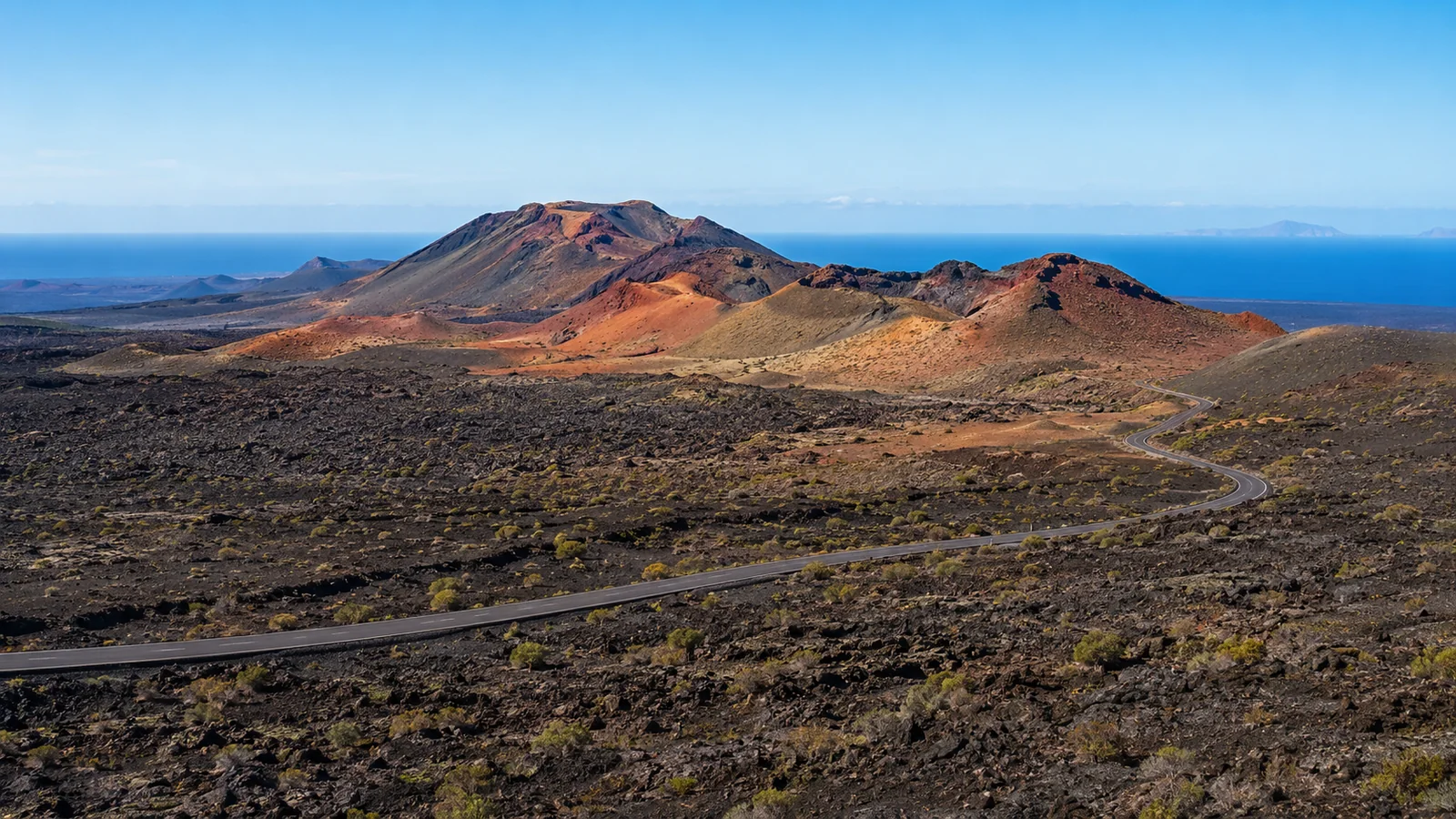
Between 1730 and 1736, a prolonged series of eruptions transformed much of western Lanzarote. Farmland and settlements disappeared under lava, while new cones, craters and extensive black plains were created. Timanfaya National Park now protects this extraordinary geological record. The landscape may appear empty at first, but look carefully: rough lava ropes, red cinders, dark basalt and small resilient plants reveal a place that is still full of life and change.
The best-known visitor area is Montañas del Fuego, around Islote de Hilario. Here, geothermal heat remains close to the surface. The demonstrations offered by the park team are memorable, especially with children, but they also explain why visitors must stay within the authorised areas. Timanfaya is fragile: it is a national park, not an open hiking area, and its protection is part of what makes the experience so special.
What you will see at the Fire Mountains
The main experience is the Route of the Volcanoes, completed by coach on a road that is closed to ordinary traffic. It passes through craters, lava flows and ash deposits that cannot be explored freely on foot. Sitting by a window is worthwhile: the road reveals subtle changes in texture and colour, from glossy-looking lava to pale slopes of volcanic sand. Take your time to observe rather than trying to photograph every second.
At Islote de Hilario there are viewpoints, visitor services and El Diablo restaurant, known for its geothermal grill and its sensitive integration into the landscape. Its connection with César Manrique’s approach to architecture is easy to understand: the building is designed to let the volcanic surroundings remain the real protagonist. Even if you do not eat there, it is a good place to pause and take in the scale of the lava fields.
How to get to Timanfaya
The main access to Montañas del Fuego is on the LZ-67 road, between Yaiza and Tinajo. It is an easy drive from Puerto del Carmen or Playa Blanca, usually taking around thirty to forty minutes depending on where you start. From Arrecife and Costa Teguise, allow a little longer. A hire car gives you the freedom to combine the park with other southern highlights, although the roads can be exposed to strong wind.
Open the Timanfaya location in Google Maps before leaving your accommodation. Only stop in signed places and drive carefully in windy conditions. If you do not want to drive, several guided island tours include Timanfaya. Check the schedule before booking; a route with too many stops can leave little time to enjoy the national park itself.
Tickets and booking
Tickets for Montañas del Fuego should be purchased online in advance and are linked to a date and arrival time slot. This system helps protect a sensitive place and reduces uncertainty on arrival. Do not assume that tickets will be available at the entrance. Before travelling, check the official CACT Lanzarote website for current prices, time slots, opening hours and any temporary access information.
The normal ticket includes the visitor area and the Route of the Volcanoes. It is different from the limited hiking activities managed by the National Park. If walking in volcanic terrain is your priority, use the official park information and book an authorised route where required. Never leave the marked areas or walk on lava fields simply to get a closer photograph.
Best time to visit and useful tips
Morning is often comfortable, while later visits can bring softer light on the volcanic cones. Conditions can change quickly in Lanzarote: trade winds, haze and low cloud may affect the view even on a sunny day. Bring water, sunscreen, sunglasses and a light windproof layer. Wear stable shoes for the visitor areas and keep children close near any uneven ground.
Respecting the rules is part of a good Timanfaya visit. Do not collect stones, leave rubbish, climb on lava or fly a drone without permission. For families, the coach route is convenient and accessible, but it helps to explain to children why this unusual landscape needs care. A quiet, observant visit is far more rewarding than rushing from one photo point to the next.
Plan a complete day in southern Lanzarote
Timanfaya combines naturally with La Geria, where vines grow in volcanic ash behind small dry-stone windbreaks. You can also continue to El Golfo to see the Charco de los Clicos from its authorised viewpoint, or visit the Salinas de Janubio and Los Hervideros. Keep the itinerary relaxed: the best routes leave time for a local lunch, a short coastal stop and an unhurried look at the landscape.
Timanfaya is more than Lanzarote’s famous attraction. It is the clearest way to see how volcanoes shaped the island’s history, farming and visual identity. With an advance booking, suitable clothing and a little curiosity, the Fire Mountains will become one of the most memorable moments of your stay.